Continuous Fiber Composites
ES3 SCRAM can produce complex 3 dimensional fully consolidated thermoplastic composite parts all on one machine.
ES3’s work is focused in the environmentally responsible development of recyclable continuous fiber composite material. Composite structures (such as wind turbine blades) are too often only disposable through underground burial. This very undesirable end-of-life requirement can and should be avoided. Hence, ES3 prioritizes development and usage of highly recyclable thermoplastic based composite materials.
ES3 has several continuous fiber composite development and production machines. Our largest and most advanced is the Electroimpact SCRAM.
The SCRAM is a 6-axis machine which enables our material designers to engineer composites where the fiber orientation can be specified at every point in the part’s geometry. In this way, ES3 can optimize part performance by tailoring strength and flexibility where needed. ES3 is developing aerospace replacement parts with unprecedented strength-to-weight ratios.
The SCRAM can produce complex 3 dimensional fully consolidated thermoplastic composite parts all on one machine. Shown left is the ES3 SCRAM producing an aircraft airduct by wrapping fibers around a fixture which was also produced by the ES3 SCRAM.
The 6-axis Electroimpact SCRAM machine located at the ES3 facility in Clearfield, Utah.
Four different closeup views of the SCRAM AM head fabricating an ES3 engineered specimen for test.
The SCRAM Robots core capabilities revolve around a laser assisted, in-situ consolidation process. Structures coming out of the SCRAM work cell are fully cured and ready for service use, bypassing the extensive time and cost penalties associated with traditional composite autoclave processing. With the SCRAM Robots pellet extrusion processing head, complex and bespoke layup tooling can be created on-demand to facilitate fabrication of complex composite structures. ES3 is pioneering the usage of environmentally friendly, water dissolvable material for use as compaction tooling, this allows for fabrication of composite parts with constraining interior geometries not currently possible with traditional composite hard tools. ES3’s composite fabrication expertise allows production of complex geometries, variable density cores, topology optimized load bearing structures, and outer layer finish skins.
ES3 AM continuous fiber composite material development and production is vastly facilitated by our ability to computationally predict the performance of our composite designs. Our in-house developed MARS solver with its DM4C material modeling technique enables our engineers to iterate rapidly and cost effectively between material design and computational simulation. We do not rely on the time consuming and more costly trial-and-error loop of building then testing. As such, ES3 is able to engineer custom structural components quickly and economically, delivering us to the test and qualification phase of aerospace parts development in record time. Please visit the MARS Solver – Aerospace Applications section of our website for more information.
ES3 is dedicated to the certification of continuous fiber additive manufacturing for the Scalable Composite Robotic Additive Manufacturing (SCRAM) system. Our work centers on building the qualification pathways, material data, and process controls needed to ensure that SCRAM printed composite components meet the rigorous standards required by high performance applications.
This effort spans the full certification lifecycle, including material characterization, process optimization, structural validation, and long-term durability assessment. By establishing repeatable manufacturing parameters and verifying the mechanical performance of printed parts, ES3 ensures that continuous fiber additive manufacturing can be reliably integrated into critical aerospace and defense systems.
Through close collaboration with industry partners, research organizations, and government agencies, ES3 is helping lay the foundation for widespread adoption of this emerging technology. By developing robust documentation and quality frameworks, ES3 is enabling the SCRAM system to deliver strong, lightweight, and highly customizable composite structures suitable for next generation platforms and advanced engineered solutions.
ES3’s rapid manufacturing capabilities are continuously advancing as we work toward achieving full equivalency with conventional composite processing methods. Through systematic validation, process refinement, and performance benchmarking, we are steadily closing the gap between traditional manufacturing approaches and the novel, highly flexible capabilities of the SCRAM continuous fiber additive manufacturing system.
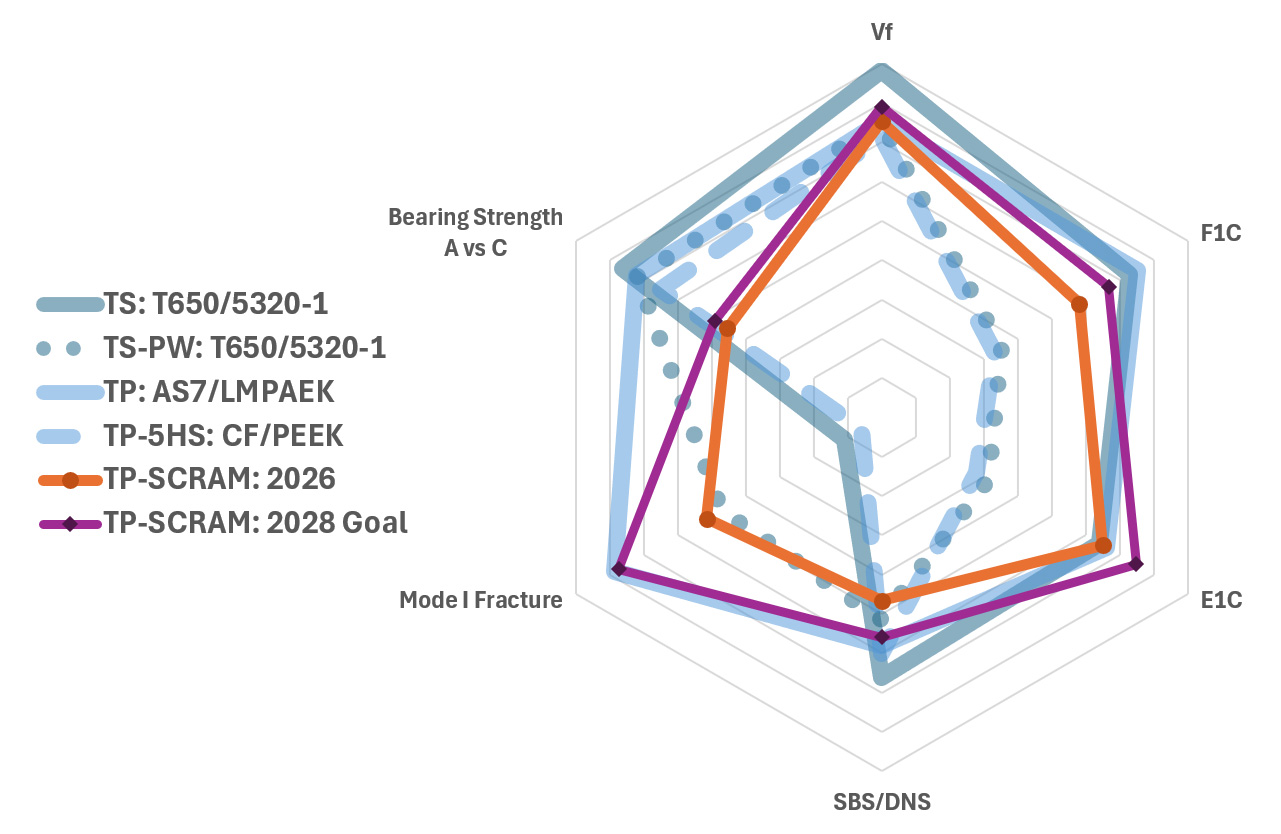
Building on this progress, ES3 is committed to enabling innovative manufacturing pathways through tailored material behavior, refined process controls, and data driven optimization. The accompanying radar chart highlights the broad dynamic range of properties achievable across established manufacturing methods and the emerging SCRAM ecosystem, illustrating how ES3 is expanding what is possible in composite design and production.
If you would like to learn more about our material properties, performance data, or request detailed data sheets, please contact our team. We’re happy to provide additional information and support for your project needs. You can reach us at [email protected].
Composite Testing Capabilities
The ES3 Composite Manufacturing Center has years of experience, and the necessary equipment required to characterize material properties and validate a wide array of composite materials. Our team specializes in characterizing the mechanical, thermal, and environmental behavior of composites used in aerospace, defense, industrial, and emerging technology sectors. With a meticulous focus on precision and repeatability, we support customers through every stage of material qualification and composite structure performance.
Testing Standards
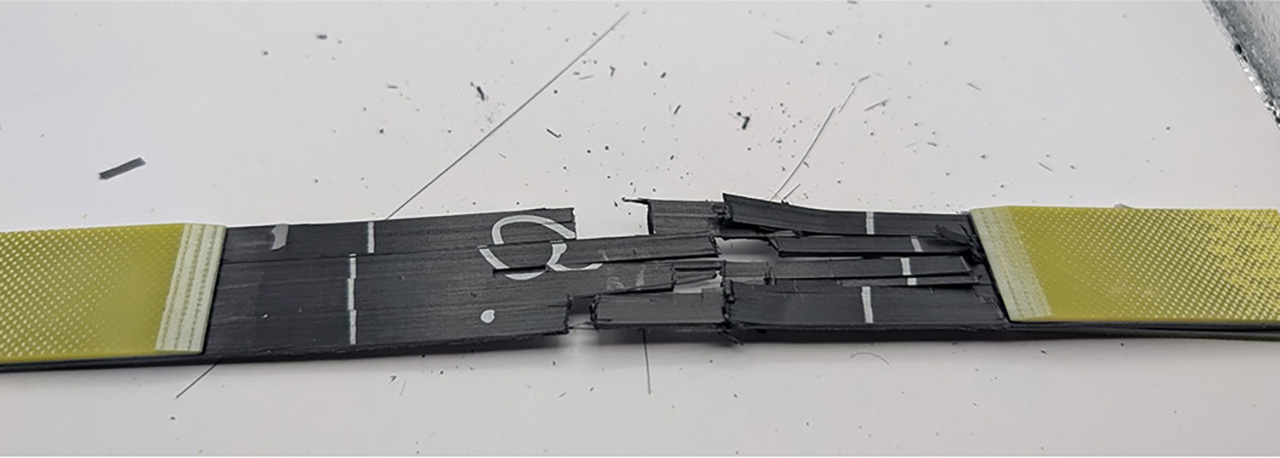
We offer a broad suite of testing services, following ASTM standard protocols typical within the composite industry. ES3’s composite testing capabilities include, but are not limited to:
| Testing Standard | Description | Property |
|---|---|---|
| ASTM D3039 | Tension | Tensile Strength, Modulus, Poisson’s Ratio |
| ASTM D6641 | Compression | Compressive Strength, Modulus, Poisson’s Ratio |
| ASTM D3518 | In-Plane Shear | Shear Stress, Chord Modulus |
| ASTM D7078 | V-Notched Shear | Shear Strength, Shear Strain |
| ASTM D790 | Flexural | Flexural Stress, Flexural Strength |
| ASTM D3846 | Double Notch Shear | Interlaminar Shear Strength |
| ASTM D5766 | Open-Hole Tension | Notched Tensile Strength |
| ASTM D6742 | Filled Hole Tension / Compression | Filled Hole Tensile Strength Filled Hole Compressive Strength |
| ASTM D6484 | Open-Hole Compression | Notched Compression Strength |
| ASTM D6415 | Curved Beam Strength | Interlaminar Strength |
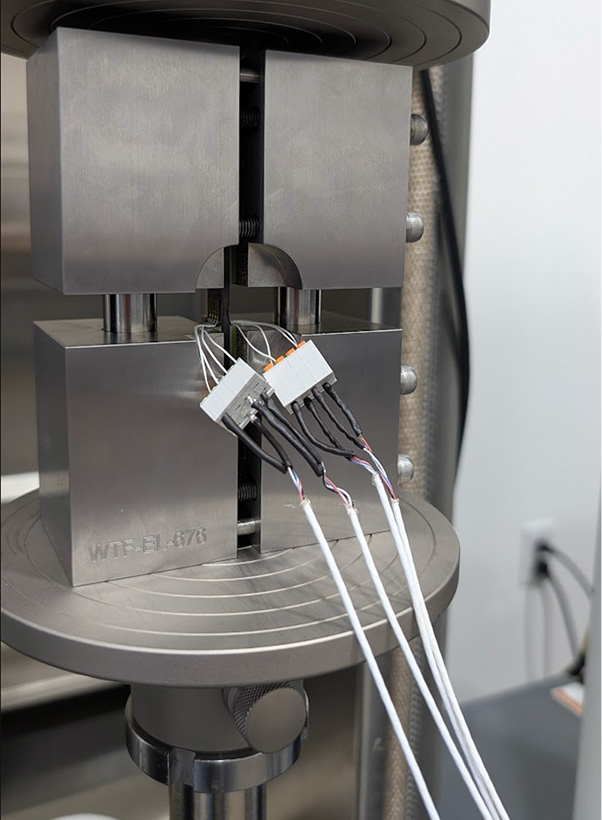
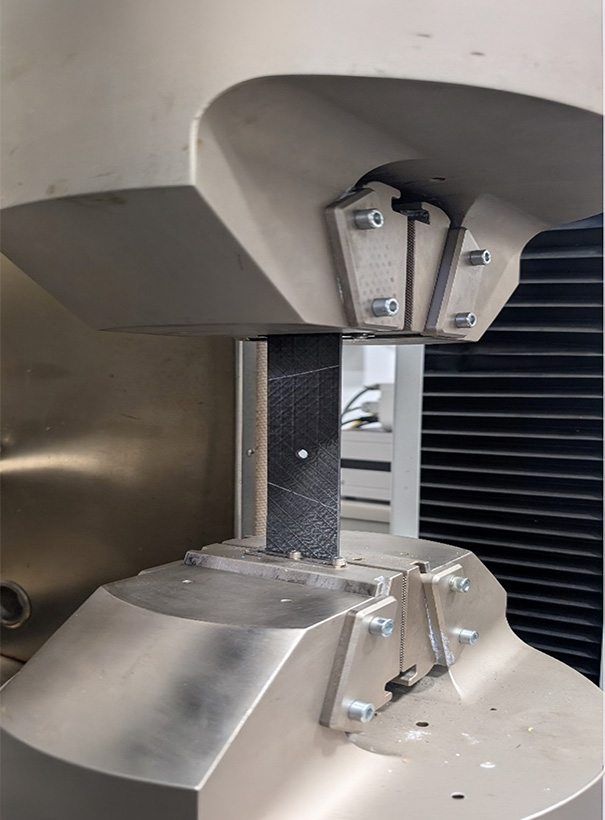
(Left) Longitudinal Compression test per ASTM D6641, (Right) Open Hole Tension testing of Laminate per ASTM D5766
Environmental Testing Conditions
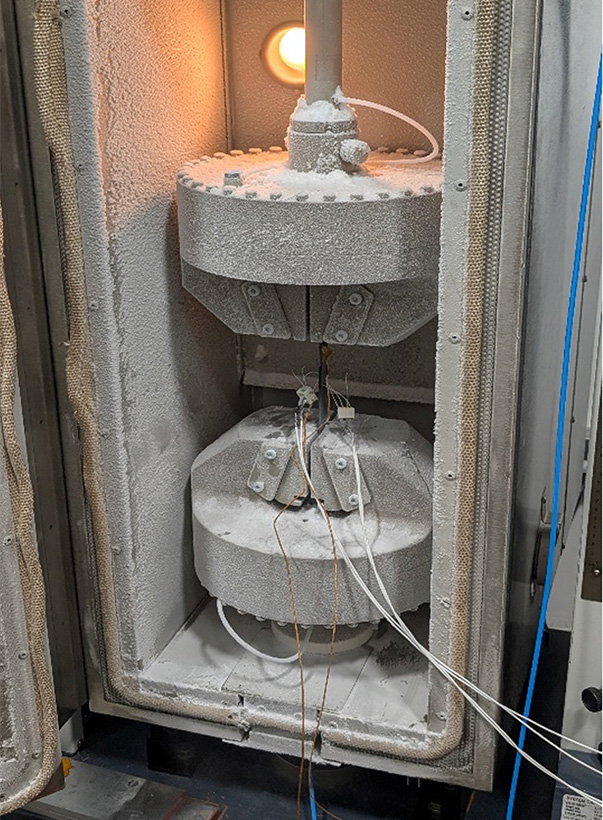
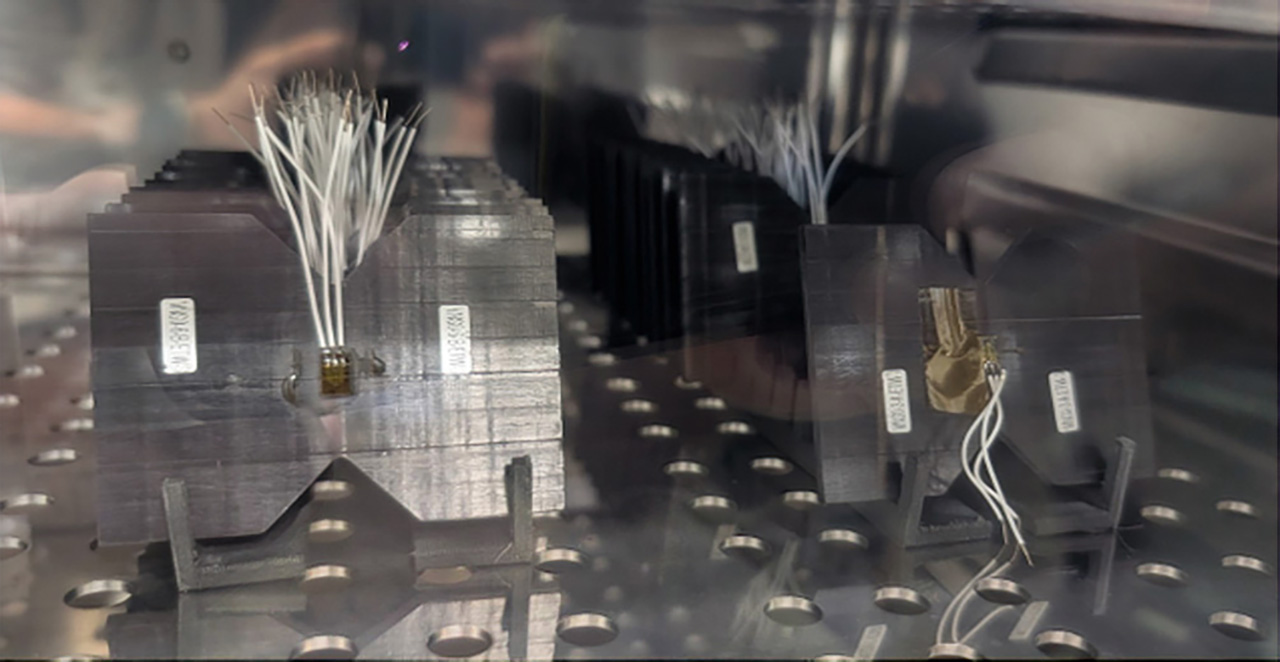
The ES3 Composite Manufacturing Center is equipped to evaluate composite materials under a wide range of environmental conditions to replicate in field use of the material. Our load frame is equipped with an environmental chamber allowing for testing at temperatures between -100 °F to 300 °F. In addition, ES3 has a temperature and humidity-controlled oven, allowing for testing of composite materials in a fully water saturated condition. These environmental test profiles help our clients verify their composite systems remain dependable in the harshest operating environments.
Specialized Testing Procedures
ES3 also offers more specialized composite material testing including DSC & DMA testing (ASTM D3418 / 7028) to evaluate core material properties such as glass transition temperature, CTE, and crystallinity percentages in thermoplastic composites. ES3 is also equipped and set up to perform acid digestion testing of composite materials per ASTM D3171, allowing for calculation of Fiber Volume %, Resin Content %, and Void Content % in fabricated composite specimens. Compression after impact testing (ASTM D7136) is another test standard ES3 can employ to help qualify new or existing structural components.
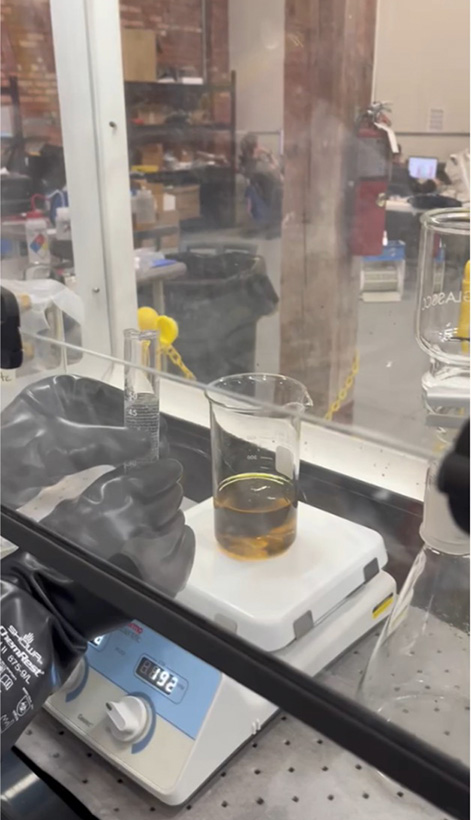
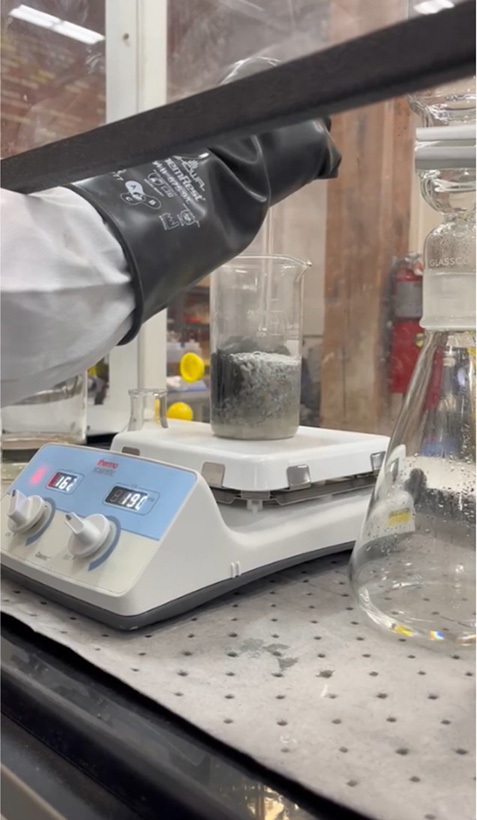
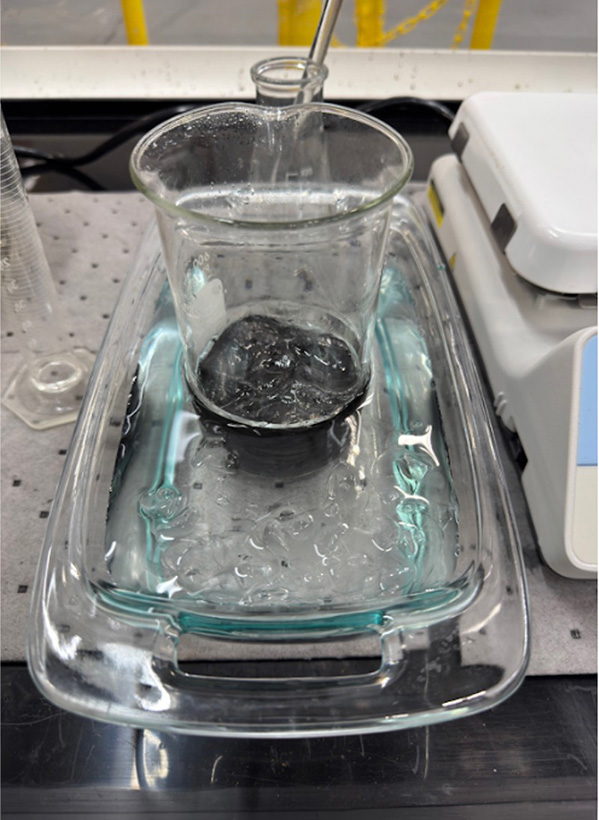
Acid Digestion Testing for Void Content % Evaluation, Per ASTM D3171
Beyond just standard test protocols, ES3 welcomes collaborations with clients to develop customized testing methodologies tailored to unique applications. From prototype assessment to final certification programs, we emphasize responsiveness, technical expertise, and transparent communication. Our mission is to empower designers, engineers, and manufacturers with reliable insights that accelerate innovation and ensure the success of composite structural components.
Defect Identification and Active Monitoring for Advanced Manufacturing (AM4AM) software
ES3’s Digital Manufacturing Twin capabilities are powered by our Defect Identification and Active Monitoring for Advanced Manufacturing (AM4AM) software. This system supports a wide range of ES3 manufacturing technologies and enables in‑situ monitoring for out‑of‑autoclave thermoplastic AFP, even on complex geometries. Using AI/ML and advanced computer vision, AM4AM continuously analyzes machine behavior in real time through video, thermal imaging, and multiple sensor inputs.
Behind the scenes, AM4AM manages the full data pipeline—ingesting video frames, synchronizing telemetry, and applying automated preprocessing and augmentation to prepare data for training. ES3 employs a structured test‑train‑validation workflow, feeding processed data into convolutional and temporal neural networks that identify defects from single frames or multi‑modal sensor streams. All data handling, storage, and synchronization occur seamlessly without requiring additional input from the user.
This digital ecosystem supports both real‑time and batch defect detection, delivering low‑latency alerts and robust offline analysis. With integrated storage for metadata, videos, and model weights, along with a scalable training engine and multi‑threaded inference pipeline, AM4AM provides a comprehensive, automated solution for monitoring, analyzing, and improving advanced manufacturing processes.

DM4C for SCRAM
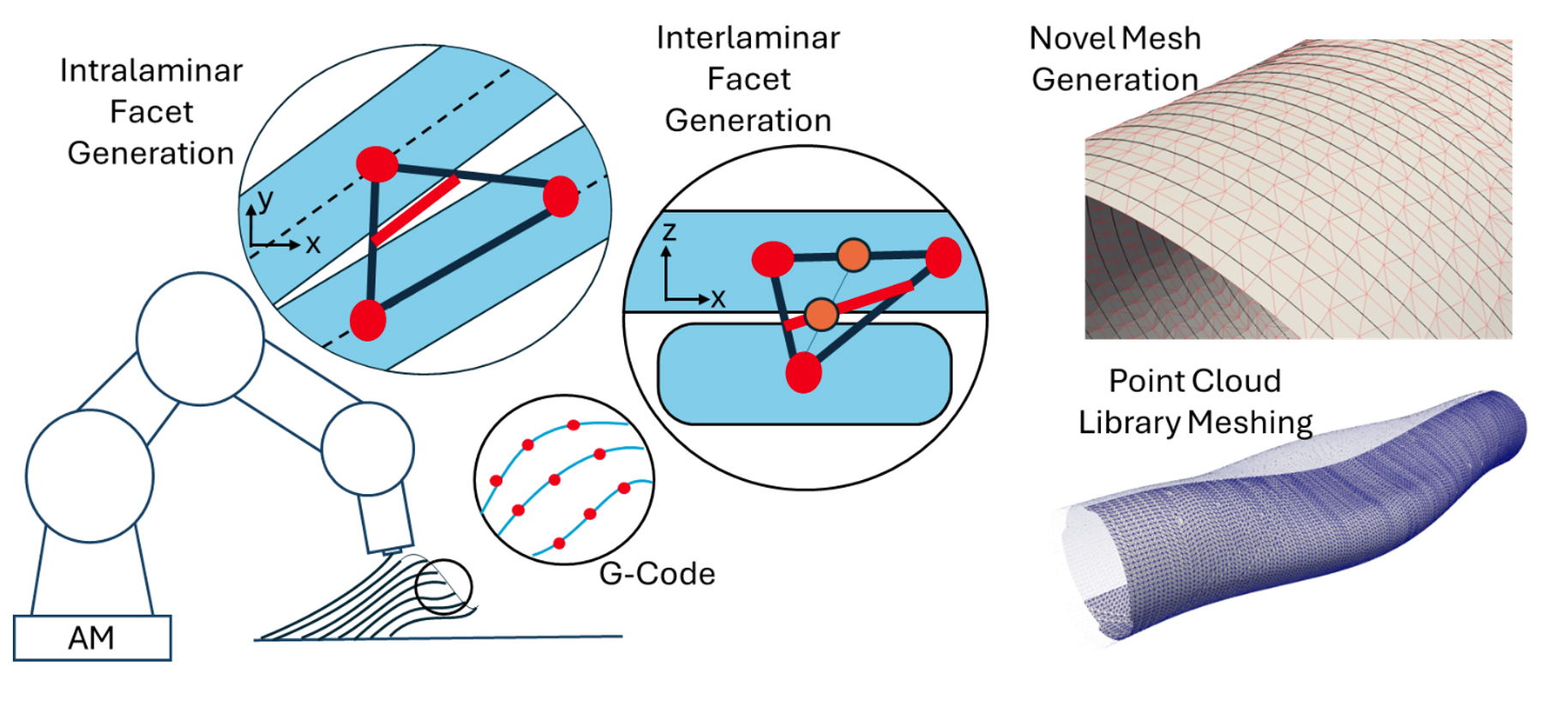
ES3’s Digital Manufacturing Twin provides a high‑fidelity modeling environment tailored to the unique behavior of continuous‑fiber additive manufacturing in the SCRAM system. By directly importing SCRAM deposition files and nozzle paths, the model reconstructs how tape is steered, deposited, and consolidated in three‑dimensional space. This allows ES3 to capture the nuances of start‑and‑end deposition, tape width variation, and the formation of gaps and overlaps—critical features that influence structural performance and are explicitly represented within the digital twin.
To accurately model material behavior, ES3 simulates both intralaminar and interlaminar response using advanced geometric and numerical strategies. For surface discretization, the system automatically selects between 2D planar projection or 3D triangulation using Point Cloud Library methods, enabling accurate modeling of complex geometries. Intralaminar facets, interlaminar interfaces, and the effects of porosity or steering‑induced deformation are all embedded directly into the mesh structure. These capabilities allow the digital twin to represent printed architectures with a level of detail that mirrors real‑world manufacturing outcomes.
Building on this geometric precision, ES3 continues to refine the kinematic links between tape deposition rates, angular steering, and facet‑level strain behavior—an essential step for predicting failure in as‑printed structures. Through algorithmic improvements, enhanced facet definitions, and ongoing calibration of material interfaces, the digital twin is evolving into a powerful predictive tool. It supports fracture simulation, structural evaluation, and quality assessment, giving ES3 and its partners the ability to understand and optimize SCRAM‑printed components before a part is ever manufactured.
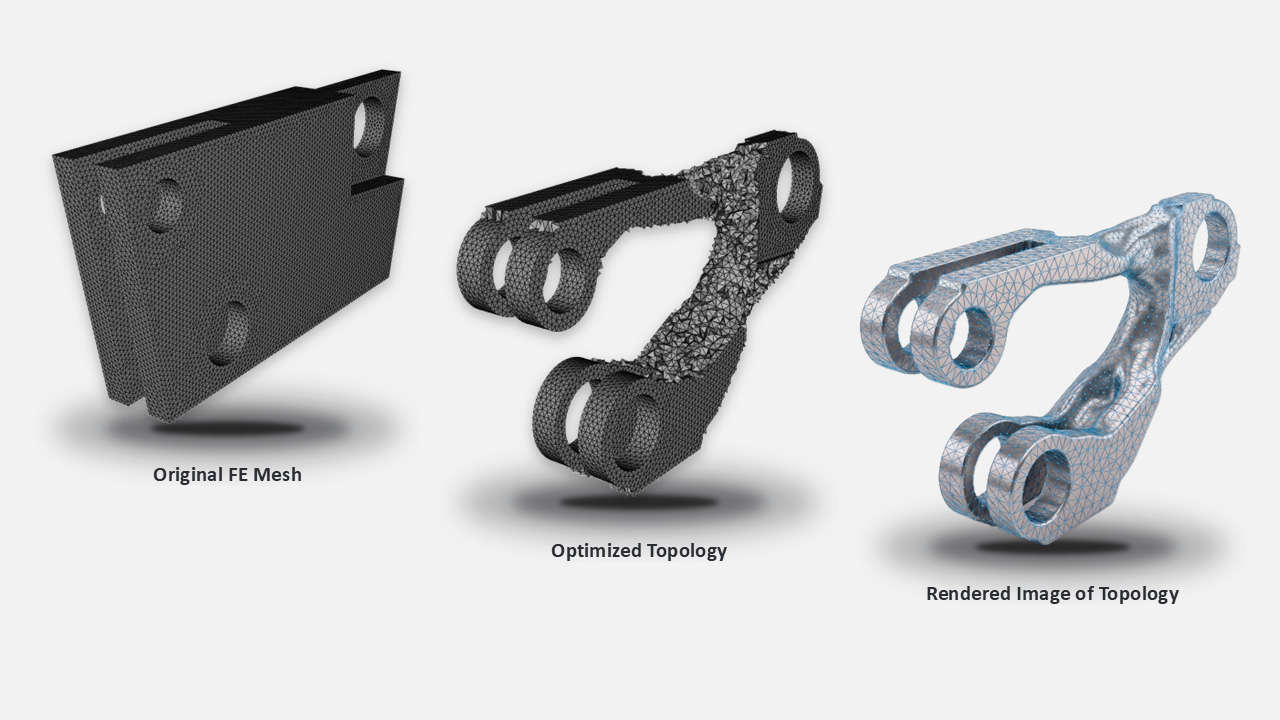
ES3 is redefining what’s possible in composite design by advancing topology optimization specifically for continuous fiber additive manufacturing. Traditional optimization tools cannot capture the steering, curvature, and anisotropic behavior of printed composites—but ES3’s approach is built precisely for these challenges. By leveraging next generation algorithms, we enable designers to create lighter, stronger, and fully manufacturable structures tailored for the SCRAM platform.
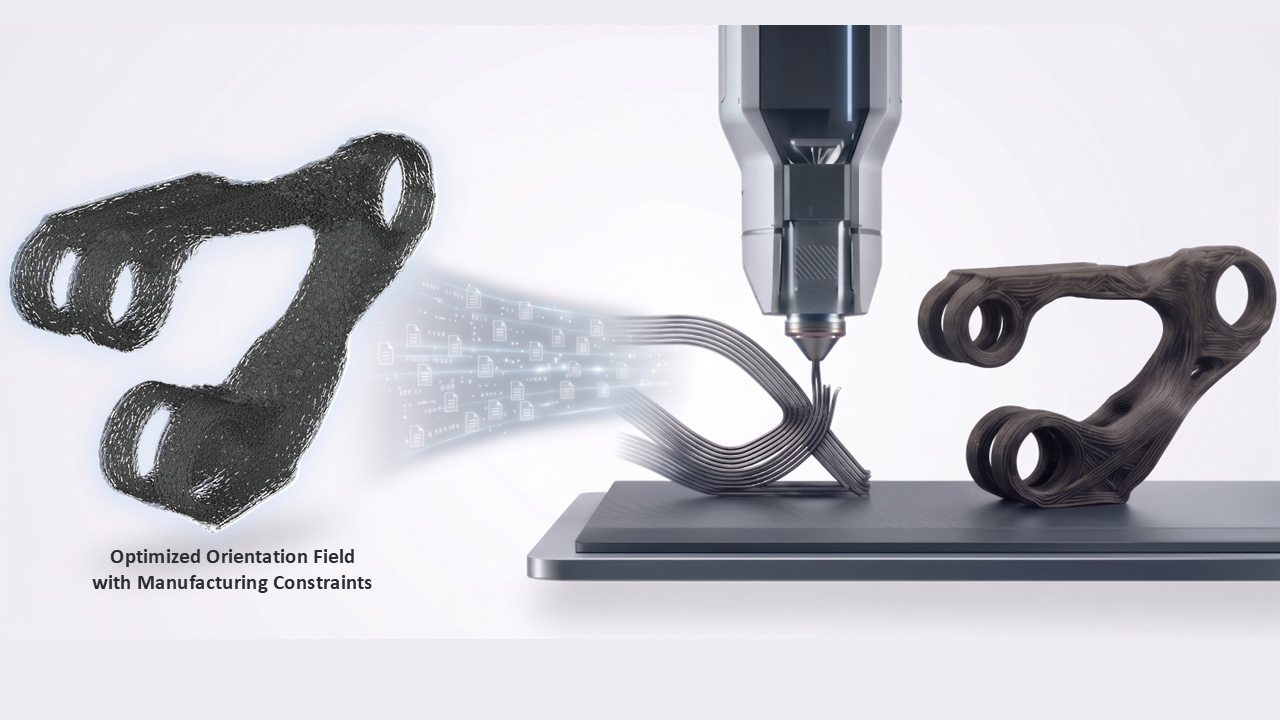
A key innovation in ES3’s framework is its smooth, spline‑based tensor representation of fiber orientation across the entire design domain. This enables the optimizer to generate orientation fields that are manufacturable, continuous, and aligned with the kinematic constraints of SCRAM’s advanced deposition capabilities. The method naturally incorporates manufacturing rules such as allowable curvature, steering continuity, and explicit control of gaps and overlaps between adjacent fiber paths. As a result, the optimized designs are not just mathematically optimal—they are ready to print.
To ensure stability and manufacturability, ES3 employs sophisticated constraint handling techniques, including localized aggregation and the Augmented Lagrangian Method. These methods allow optimization to respond intelligently to complex manufacturing rules, such as minimum bend radii, fiber steering limits, and deposition continuity. The result is a powerful, end to end workflow that produces optimized composite geometries ready for printing—bridging the gap between automated design and high-performance additive manufacturing.